
Exit planning
The twelve-month plan to prepare your business for sale in Texas
What to change in the year before you go to market, ranked by what it is actually worth to the buyer who pays for it.

By Michael D. Rubin, CEO & Founder · Updated November 2026 · 1,908 words
To prepare your business for sale, start twelve to twenty-four months out and work in this order: reduce how much the company depends on you, make the revenue more predictable, get three years of financials to reconcile with your tax returns, and remove the risks a buyer would discount. For a Texas company in the $3 million to $100 million revenue range, that work decides the multiple, and almost none of it can be done after a letter of intent is signed.
- Owner dependence is the largest discount and the slowest fix, so it starts first.
- Records that reconcile to tax returns protect the price in due diligence.
- Contracts and leases need change-of-control and assignment clauses checked while you are not visibly selling.
- A data room built in advance lets the sale run on your timetable, not the buyer's.
Months 1–3: where does your company stand today?
Start with an honest baseline: what the company is worth today and why. A free snapshot valuation costs nothing and nobody is contacted. A formal business valuation is worth its fee if you need a number you can defend to a partner, a bank or the IRS.
In the same quarter, look at the business the way a buyer's diligence team will. They answer four questions first: are the earnings real, are they repeatable, how concentrated is the customer base, and does the company run without the owner?
- Reconcile three years of financial statements to the tax returns and fix every difference
- Build the add-back schedule, with documentation behind every line
- Produce revenue by customer for three years and look at the concentration honestly
- Write down every task only you can do. That list is the price discount, in longhand
Is your Texas entity in good standing?
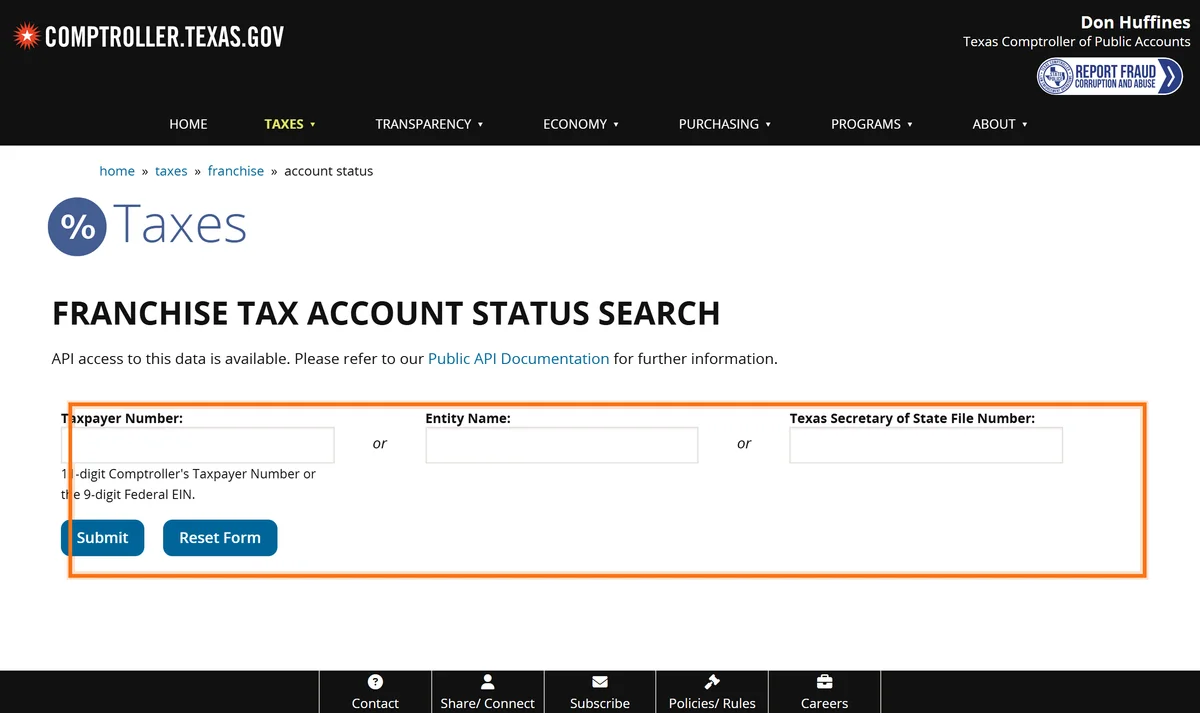
A buyer's attorney will check that your company legally exists and is current on its state obligations. In Texas, franchise tax is administered by the Comptroller of Public Accounts, and entity filings sit with the Secretary of State. A lapsed franchise tax report or a forfeited right to transact business is easy to fix a year out and awkward to fix two weeks before closing.
Check the minute book, the ownership records and every license and registration the business needs to operate at the same time. Messy corporate records rarely kill a deal, but they slow it down and give the buyer a reason to ask for more protection in the purchase agreement.
Months 3–9: how do you reduce owner dependence?
This is the single largest lever, and the slowest. If customers buy because of you, if pricing lives in your head, if every quote needs your approval, a buyer is purchasing a job rather than a business, and pays accordingly. The work is unglamorous and specific:
- Introduce a second face to your top customers, and let that person lead the relationship for a full cycle before you sell
- Write down what you know: pricing logic, quoting rules, supplier terms, the reasons behind the exceptions
- Promote or hire one layer of management, and let them make decisions you would have made, including some you would have made differently
- Take two weeks off and do not answer the phone. What breaks is your to-do list; what does not break is already fixed
Months 3–12: how do you make the revenue worth more?
Buyers pay a multiple of earnings, and they choose the multiple based on how confident they are that the earnings will repeat. For companies in our range that is usually three to seven times adjusted EBITDA, and where you land depends far more on revenue quality than on revenue size. Our piece on what your business is worth explains how the multiple is set.
- Convert one-off work to contracted or recurring revenue wherever your market allows. It is worth more than the same increase in sales.
- Reduce customer concentration, either by growing other accounts or by putting the large one on a longer written contract with an assignment clause that survives a change of control.
- Check every material contract for change-of-control language. A clause that lets your largest customer walk on a sale hands them a veto over your transaction.
- Raise prices where you have been avoiding it. A price increase that holds goes almost entirely to EBITDA, and then gets multiplied.
Months 6–12: which risks will a buyer discount?
Most discounts come from a short list of problems that a buyer can see in the first weeks of diligence. Each one can be fixed in months if you start early:
| What buyers discount | What to do about it | How long it takes |
|---|---|---|
| Deferred maintenance and aging equipment | Fix or replace what a buyer would have to; document what you have spent | 3–9 months |
| Messy corporate records | Minute books, ownership records, licenses, registrations and Texas filings all current | 1–2 months |
| Leases with short terms or no assignment | Renegotiate the term and the assignment clause now, while you are not visibly selling | 2–6 months |
| Inventory that does not turn | Write it down or sell it. Carrying it does not fool anyone in diligence | 3–6 months |
| Undocumented processes | Written procedures for anything a new owner needs in week one | 3–12 months |
| Key employees with nothing in writing | Confirmed terms, and retention arrangements for the people who matter | 1–3 months |
Read the table from the right: the items with the longest fix time are the ones to start this quarter. A lease or an employee agreement can be settled in weeks; written procedures and equipment take most of the year, and a buyer will price whatever is still open when they arrive.
What should you not do in the year before a sale?
Some things owners do in the final year actively cost them money.
- Do not cut costs artificially to inflate one year's EBITDA. Diligence normalizes it, and the attempt damages your credibility on everything else.
- Do not stop investing. A business visibly running down is priced as one.
- Do not tell your team. A sale can fail at any point until the money is wired; an announcement cannot be taken back. Read how to sell your business confidentially.
- Do not change your accountant, systems or entity structure in the final six months unless there is a tax reason. Continuity in the records is worth more than the improvement.
- Do not take the first unsolicited approach seriously without a market check. Here is what to do with an unsolicited offer.
What does a quarter-by-quarter plan look like?
| Quarter | The work | What it is for |
|---|---|---|
| Q1 | Opinion of value; reconcile three years of financials; add-back schedule; revenue by customer; Texas good-standing check | You cannot improve a number you have not measured |
| Q2 | Begin delegating owner-held relationships; document pricing and quoting; promote or hire a second layer | Owner dependence is the slowest fix and the largest discount |
| Q3 | Contract review for change of control; renegotiate leases; convert one-off work to contracted revenue | Removing the reasons a buyer would cut the price |
| Q4 | Build the data room; engage a transaction attorney; model an asset sale versus a stock sale with your CPA | Being ready means the sale runs on your timetable |
The quarters overlap in practice: delegation started in Q2 is still running in Q4. What matters is the order. Measure first, fix owner dependence early because it takes longest, and leave the data room for last because it simply collects what the earlier quarters produced.
In the final quarter, getting ready to go to market comes down to five things:
- Build the data room before you need it: three years of financials, tax returns, contracts, leases, licenses, equipment schedules, customer analysis and an organization chart
- Engage a transaction attorney, not the attorney who wrote your lease
- Model the tax outcome of an asset sale versus a stock sale with your CPA, and know which you want before a buyer asks. Texas has no personal state income tax, but federal tax on the gain still depends heavily on the structure
- Agree with your advisor what the blind profile will say and how your market will read it
- Decide in advance what you would accept: price, structure, transition period, and what happens to your people
The ten steps of our sale process show what happens once you are ready, from the engagement letter to the money being wired. On average it takes three to nine months.
What does preparation cost, and what does it return?
Preparation is not free. Expect to pay a transaction-literate CPA to reconcile three years and build the add-back schedule; possibly a formal valuation; possibly some legal work to renegotiate a lease or a change-of-control clause; and your own management time to do the delegation properly.
Set against that: a buyer applies its discount at the multiple, not at the cost. A $50,000 add-back a buyer refuses costs $250,000 in a business selling at five times. That arithmetic is why preparation is the highest-return work available to an owner within two years of a sale.
We will not quote a percentage uplift; anyone who does is guessing about your company. What we can say is the order in which these changes move the number: owner dependence first, revenue quality second, record quality third, everything else after.

Who do you need around you, and how do you know it is working?
Four people, engaged in this order:
- A CPA who has worked on transactions, from twelve months out, for reconciliation, add-backs and the asset-versus-stock tax model. There is no offense in bringing in a specialist alongside your regular accountant.
- An M&A advisor, from nine to twelve months out, early enough to shape the preparation and not just run the sale. See how to choose one.
- A transaction attorney, engaged before the letter of intent. The purchase agreement is where the money you negotiated is protected or given back.
- A personal financial adviser, before you accept an offer. What the proceeds have to do for the rest of your life decides which offer is acceptable.
Six checks tell you the preparation is real, not just planned:
- You can hand three years of financials to a stranger without explaining anything
- You can take two consecutive weeks off and the numbers do not move
- Someone other than you leads your three largest customer relationships
- You can produce revenue by customer, backlog and an equipment schedule the same day they are asked for
- Every material contract has been read for change-of-control language in the last twelve months
- You know what you would accept, and what you would do the following Monday
Why Texas owners prepare with MDR & Associates
MDR & Associates has sold privately held Texas companies since 2008, working with owners of businesses with $3 million to $100 million in revenue from our Frisco office at 1518 Legacy Dr., Suite 220, and in Dallas, Fort Worth, Austin, Houston and San Antonio. Our consulting division does pre-exit consulting in the twelve to twenty-four months before a sale, so the work above is planned, ranked and checked rather than guessed at.
When you are ready, our sell-side representation works on a 100% performance-based success fee: if we do not sell the company, you owe us nothing (how our fee works). You can see 77 of the companies we have sold, by name, on our results page.
The cheapest conversation you will ever have about a sale is the early one. Start with a free snapshot valuation or call us at (855) 637-2776.
Questions owners ask next
How far in advance should I prepare my business for sale?
Twelve to twenty-four months. The biggest discounts, owner dependence and unpredictable revenue, take the longest to fix, and almost nothing can change once a letter of intent is signed.
What is the first thing to do when preparing a business for sale?
Get an honest opinion of value and reconcile three years of financial statements to your tax returns. You cannot improve a number you have not measured.
Should I tell my employees I am preparing to sell?
Not during preparation. A sale can fail until the money is wired, and an announcement cannot be withdrawn. Key managers are usually told late, with a retention arrangement in place.
Does it matter if my Texas franchise tax reports are behind?
Yes. A buyer's attorney will check the company's standing with the Texas Comptroller and Secretary of State. Catching up a year out is routine; finding the problem during due diligence slows the deal.
Should I cut costs to raise EBITDA before selling?
Not artificially. Buyers normalize one-year cuts in diligence, and the attempt costs you credibility. Real, lasting improvements such as a price increase that holds are a different matter.
Does MDR & Associates charge for pre-exit consulting?
Pre-exit consulting is a separate service with its own scope and price, agreed in writing first. Selling the company is on a success fee only, owed only if the sale closes.